
BPC-157 side effects are one of the most searched questions about this peptide, and the answer depends on what has actually been studied. This guide explains in simple terms what BPC-157 is, what researchers have looked at, which side effects were recorded, and what is still unknown. It describes the research record only and is not advice for any person.
What is BPC-157, and why are people using it?
BPC-157 is a small, lab-made peptide, which is a short chain of 15 amino acids (the building blocks of proteins). It is based on a protein found in human stomach juice, and the name stands for “Body Protection Compound”. A researcher in Croatia first published it in 1993.
Interest grew because early lab studies suggested it might help injured tissue heal. It became popular with athletes and the general public who want to recover from injuries. Even so, no drug regulator has approved it as a medicine for people, and it is sold as research material. Health authorities discourage its use because there is not enough safety data in people.
What are the benefits of BPC-157?
Researchers have explored the areas below. Almost all of the evidence comes from lab studies, not proof in people.
- Tendon and ligament repair. A 2025 review found that early studies reported better healing of tendon and ligament injuries in lab models.
- Muscle and bone recovery. The same review reported signs of better healing in muscle injuries and fractures in lab work.
- Stomach and gut protection. Because it comes from stomach juice, researchers have studied whether it protects the lining of the digestive tract.
- Calmer inflammation. Reviews report that it lowered inflammation signals in lab studies.
These are research findings, not proven treatments. The BPC-157 benefits guide covers what each area of research looks at in more detail.
See also: TB-500 Benefits, What the Research Shows
How does BPC-157 work?
Nobody has confirmed one exact way that BPC-157 works. Reviews describe a few ideas:
- Growing new blood vessels. Tendons get little blood, so extra blood vessels could help them repair. Reviews say BPC-157 may switch on the signals that build new vessels.
- Protecting cells from damage. It may help cells survive stress instead of dying off.
- Boosting growth signals. It may raise some of the signals cells use to grow and repair themselves.
These are ideas drawn from lab work, not settled facts. The BPC-157 mechanism guide explains them step by step.
What are the side effects of BPC-157?
The most detailed safety study was published in 2020 in the journal Regulatory Toxicology and Pharmacology. It tested BPC-157 in four lab models. A single dose caused no effects linked to the compound. Repeated doses were well tolerated, with one exception: a small drop in creatinine, a blood marker linked to kidney function, at the highest amount tested. It did not appear at lower amounts and went back to normal within 2 weeks after dosing stopped.
The same study found only mild irritation where the compound was applied. It found no damage to genes and no harm to a developing embryo. The authors concluded that BPC-157 did not cause serious toxicity in those tests.
What does human safety data say about BPC-157?
A 2025 review in the journal Current Reviews in Musculoskeletal Medicine found three small studies in people. One looked at injections into the knee joint for knee pain, one at a painful bladder condition called interstitial cystitis, and one at safety and how the body processes the compound when given into a vein. The review says no side effects were reported in them.
The knee study was a look back at patient records from one clinic, covering 17 people who were contacted by phone months later. The bladder study had 12 participants at a private clinic. Reference summaries also list an early safety trial in healthy volunteers, but its results were never submitted.
A 2025 review in the HSS Journal searched the published literature from 1993 to June 2024 and screened 544 articles. After filtering, 36 studies remained. Of those, 35 were lab studies and only 1 involved people. Lab studies are useful for spotting early warning signs, but they cannot show how a compound behaves in many different people, over many years, or alongside other medicines.
Is BPC-157 a risk for long-term health?
The published research cannot answer this yet. The existing reports in people are small, so long-term outcomes are not described. Reviews, including a 2025 paper titled “Regeneration or Risk?”, call for larger, well-controlled studies in people. Experts list these open questions:
- How results change with amount. Strong studies in people are missing, so the link between amount and effect is not established.
- New blood vessel growth. Because BPC-157 is thought to encourage new blood vessels to form, reference summaries raise a theoretical question about effects on tumor growth. It is only a theory, and no data in people addresses it.
- Product quality. Reviews note that BPC-157 is widely sold through unregulated sources, so product quality is not covered by the published evidence.
- Regulatory review. A US FDA advisory panel on pharmacy compounding reviewed BPC-157 on July 24, 2026. Its vote was 8 to 6, and the vote is advisory only.
For a side-by-side look at how this record compares with a related compound, see TB-500 vs BPC-157.
INJURY AND RECOVERY
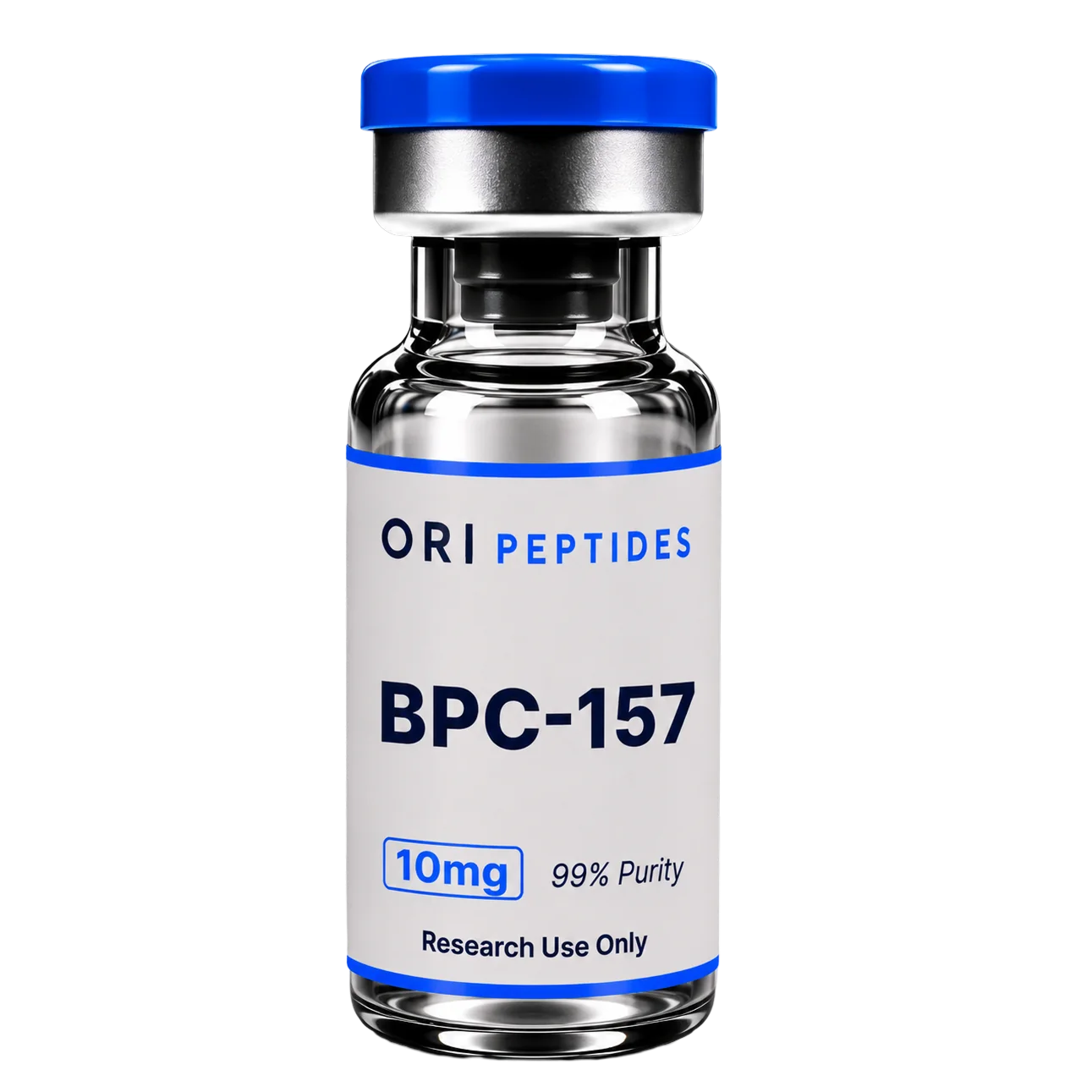
BPC-157
Dosage, injections, and capsules
There is no approved or standard dose for BPC-157, and this guide does not suggest one. The amount used in any study was set by that study’s own design.
The three small reports in people all used injections: into a knee joint, around the bladder, and into a vein. Lab work also looked at injections into muscle and under the skin, and at giving it by mouth. Oral forms come up because BPC-157 stays intact in human stomach juice for a long time. The reviews cited here do not describe studies of capsules in people, so what a capsule does is not established.
Research material usually arrives as a dry powder that must be mixed with liquid before use in a lab. The BPC-157 dosage guide explains how that mixing works, and the Concentration Calculator does the math. This is research material, not a treatment plan.
See also: Peptide Reconstitution Ratios & How to Calculate Them
Frequently Asked Questions
What exactly is BPC-157?
It is a lab-made peptide based on a protein in human stomach juice. It is studied for tissue repair and sold as research material.
Does BPC-157 actually heal injuries?
In lab studies, it helped injured tissue heal faster. In people, only a few small reports exist and they had no comparison group, so it has not been shown to heal injuries in people.
What are the side effects of BPC-157?
Lab studies recorded mild irritation where it was applied and one small, temporary change in a blood marker at the highest amount tested. Small reports in people recorded no side effects, but they were too small to be conclusive.
Key Takeaways
- BPC-157 is a lab-made 15 amino acid peptide based on a protein in human stomach juice. It is not an approved medicine.
- Almost all of the evidence on tissue repair comes from lab studies. Only a few small reports in people exist.
- The main lab safety study found mild irritation and one small, temporary blood marker change at the highest amount tested.
- The small reports in people recorded no side effects, but they were too small and too short to show long-term safety.
- There is no approved or standard dose, and how capsules behave in people is not established.
Research Use Disclaimer
This content is provided for Research Use Only (RUO). The compounds discussed are not drugs, dietary supplements, foods, or cosmetics, and are not intended for human or animal consumption, diagnostic use, or therapeutic use of any kind. They have not been evaluated by the FDA for safety or efficacy in humans. Any research use must be conducted by qualified professionals in a controlled laboratory environment, in accordance with all applicable institutional, local, and federal regulations.
Sources
- Xu C, et al. Preclinical safety evaluation of body protective compound-157, a potential drug for treating various wounds. Regul Toxicol Pharmacol. 2020.
- Vasireddi N, et al. Emerging use of BPC-157 in orthopaedic sports medicine, a systematic review. HSS J. 2025.
- McGuire FP, et al. Regeneration or risk? A narrative review of BPC-157 for musculoskeletal healing. Curr Rev Musculoskelet Med. 2025.
- Jozwiak M, et al. Multifunctionality and possible medical application of the BPC 157 peptide, literature and patent review. Pharmaceuticals. 2025.
- Lee E, Padgett B. Intra-articular injection of BPC 157 for multiple types of knee pain. Altern Ther Health Med. 2021.
- Lee E, Walker C, Ayadi B. Effect of BPC-157 on symptoms in patients with interstitial cystitis, a pilot study. Altern Ther Health Med. 2024.
- He L, et al. Pharmacokinetics, distribution, metabolism, and excretion of body-protective compound 157. Front Pharmacol. 2022.
- US FDA. Pharmacy Compounding Advisory Committee meeting materials, July 24, 2026.
- Wikipedia. BPC-157. en.wikipedia.org/wiki/BPC-157.
Explore the injury and recovery research category for related compounds, or read the BPC-157 benefits guide for what the research examines.