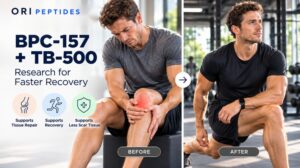
Potential TB-500 benefits are discussed constantly in recovery and injury research, often alongside BPC-157. The research behind TB-500 starts from a naturally occurring protein with a well-understood cellular role, though some of the human data credited to TB-500 online actually belongs to that broader protein’s research rather than to TB-500 itself. Here’s a plain-language, evidence-first look at what’s actually been studied, and what hasn’t. This content is provided for Research Use Only (RUO).
What Benefits Are Studied
TB-500 is a synthetic peptide based on the active region of thymosin beta-4, a naturally occurring protein found in most of the body’s cells. Researchers have looked at it in a handful of specific areas. These are effects reported in preclinical and limited research, not confirmed benefits established for general human use:
- Cell migration to injury sites. Studied for how it may help the right cells travel to where tissue damage has occurred.
- Blood vessel formation (angiogenesis). A proposed mechanism behind several of the effects below, since new blood vessels bring the oxygen and nutrients tissue needs to repair itself.
- Stem cell maturation. Looked at for a possible role in helping stem cells develop into the specialized cells needed for repair.
- Anti-inflammatory activity. Some research suggests it reduces inflammatory activity, which may be part of why injured tissue seems to recover faster.
- Wound healing across tissue types. Studied in skin, cornea, and heart muscle in various preclinical models.
See also: TB-500 Dosage & Reconstitution Research Guide
How Strong Is the Evidence, Really?
This is the part that tends to get skipped in online discussion. There’s an important distinction buried in TB-500’s reputation: the clinical wound-healing trials sometimes cited in its favor, covering things like pressure ulcers and a rare skin condition called epidermolysis bullosa, used broader thymosin beta-4 formulations, not TB-500 specifically. TB-500’s own “more human data than BPC-157” reputation is worth treating carefully for that reason. Most of the actual support for its muscle-and-tendon recovery reputation in fitness and athletic circles still comes from animal studies, not human trials of TB-500 itself.
| Feature | TB-500 | BPC-157 |
|---|---|---|
| Origin | Synthetic peptide based on thymosin beta-4 | Fragment of a stomach-juice protein |
| Proposed mechanism | Cell migration, angiogenesis, stem cell maturation | Angiogenesis, tissue protection, growth factor signaling |
| Human trial data | Preclinical (animal and lab) data only; human trials used full thymosin beta-4 | Limited, one small retrospective study, one Phase I trial |
| Anti-doping status | Banned by WADA | Banned by WADA |
| Regulatory attention | Reviewed by an FDA compounding advisory committee in July 2026 | Reviewed by the same committee in July 2026, non-binding 8-6 vote |
See also: BPC-157 Benefits, What the Research Shows
Muscle and Tendon Recovery, in More Detail
This is where TB-500’s online reputation is strongest, and where the evidence gap is most worth flagging. Fitness and athletic communities widely discuss it for faster recovery from muscle and tendon injuries, often alongside BPC-157, but that reputation rests almost entirely on animal studies and on research into the broader thymosin beta-4 molecule, not on human trials of TB-500 specifically. The proposed mechanism, faster cell migration and new blood vessel growth at an injury site, is plausible and consistent with what’s been observed in animals, but “consistent with a healing effect in animal models” is a different statement than “proven to speed recovery in people.”
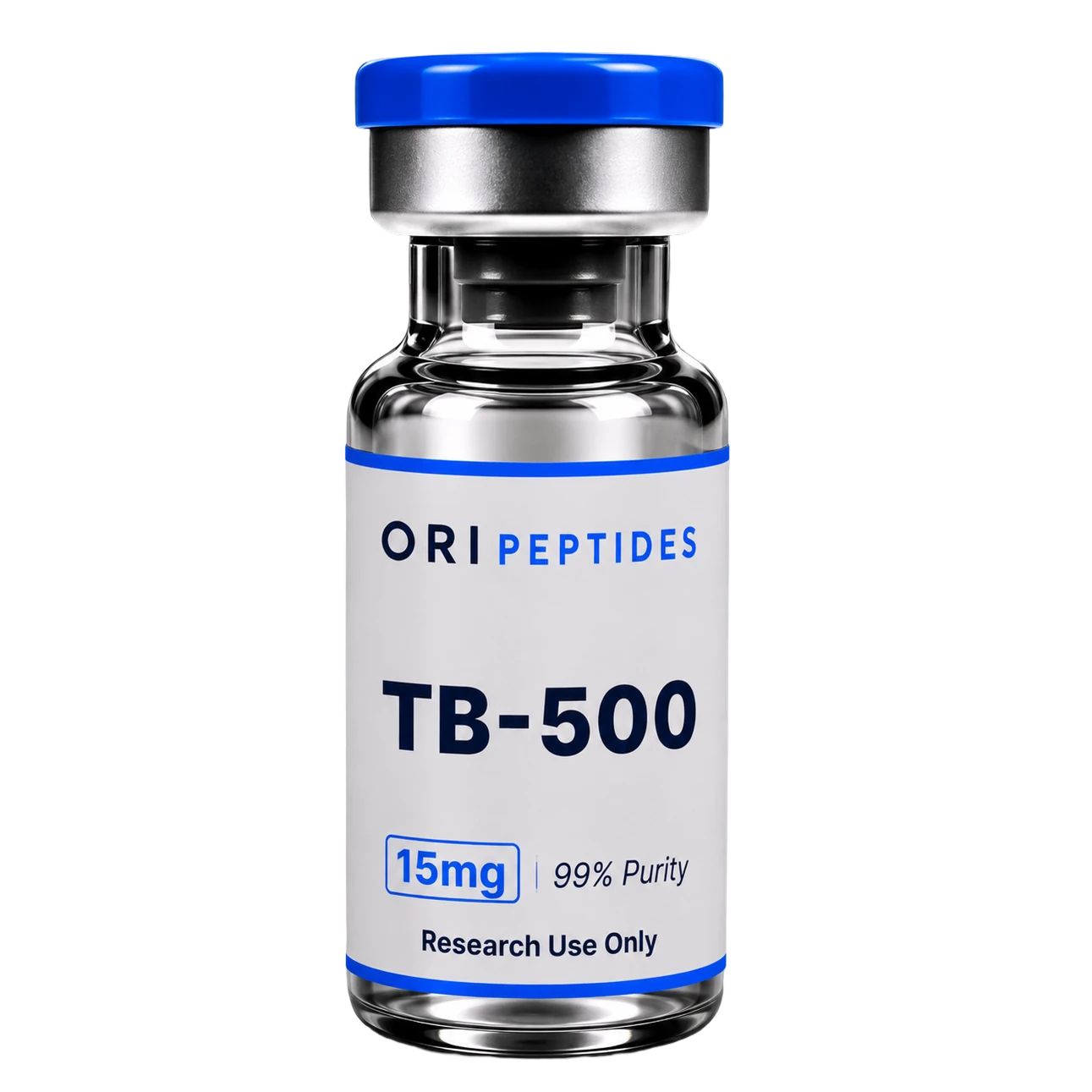
INJURY AND RECOVERY
TB-500
What’s Still Missing
Being direct about the gaps matters as much as describing the findings:
- Clinical data gets borrowed from a broader molecule. The human wound-healing trials sometimes cited for TB-500 were actually conducted with broader thymosin beta-4 formulations, not TB-500 itself.
- Mechanistic research is predominantly preclinical. Most of what’s known about how TB-500 might work comes from animal and lab-dish studies, not human research.
- Dosing and long-term safety remain unestablished for TB-500 specifically. Because human trials of TB-500 itself are essentially absent, there’s no established safety profile to point to.
- Regulatory status remains unapproved and under active review. TB-500 isn’t approved by the FDA or any other health authority, and its compounding status was still being reviewed as of mid-2026.
For laboratory research, the freeze-dried peptide needs to be reconstituted before any quantity can be measured out. Researchers typically use bacteriostatic water as the diluent, and our Concentration Calculator does the concentration math automatically.
See also: How to Reconstitute Peptides, Step by Step
FAQ
Is TB-500 the same thing as thymosin beta-4?
TB-500 is a synthetic peptide based on the active region of thymosin beta-4, a naturally occurring protein. They’re closely related, but human clinical data collected on broader thymosin beta-4 formulations doesn’t automatically apply to TB-500 itself.
Has TB-500 been tested in humans?
Not in the way its online reputation suggests. Human trials exist for broader thymosin beta-4 formulations, but TB-500 specifically has been studied mainly in animal and lab-dish research.
Is TB-500 banned in competitive sports?
Yes. The World Anti-Doping Agency has banned TB-500, the same as BPC-157.
What’s the FDA’s position on TB-500?
It isn’t approved by the FDA for any use. An FDA advisory committee reviewed TB-500’s status for pharmacy compounding in July 2026, but that review doesn’t amount to approval either way.
Research Use Disclaimer
This content is provided for Research Use Only (RUO). The compounds discussed are not drugs, dietary supplements, foods, or cosmetics, and are not intended for human or animal consumption, diagnostic use, or therapeutic use of any kind. They have not been evaluated by the FDA for safety or efficacy in humans. Any research use must be conducted by qualified professionals in a controlled laboratory environment, in accordance with all applicable institutional, local, and federal regulations.
Sources
- Goldstein AL, Hannappel E, Kleinman HK. Thymosin beta4: actin-sequestering protein moonlights to repair injured tissues. Trends in Molecular Medicine. 2005;11(9):421-429.
- Wikipedia. TB-500 (thymosin beta-4), its structure, mechanism, and research history.
- U.S. Food and Drug Administration. Pharmacy Compounding Advisory Committee meeting materials, July 2026, review of bulk drug substances including TB-500.