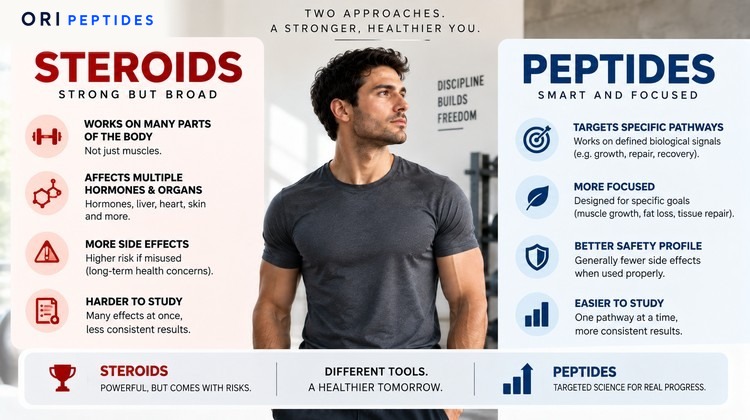
For most of the 20th century, muscle research had a fairly blunt instrument: anabolic steroids, synthetic compounds based on testosterone. The research question was straightforward. Flood the system with these compounds and study the downstream effects on muscle tissue. It worked, in the sense that muscle tissue responded, but it also came with a well-documented list of effects that reached far beyond muscle. That is because steroids do not just talk to muscle tissue. They interact with androgen receptors, proteins inside cells that respond to hormones like testosterone, and those receptors exist in nearly every hormone-sensitive tissue in the body.
Peptide research approaches the same broad goal, understanding how to influence muscle tissue development, from a completely different angle: precision over force. That shift in research philosophy is the real story behind why peptides have become one of the fastest-growing research categories in this space. This content is provided for Research Use Only (RUO).
Why Steroids Were a Blunt Instrument
Anabolic steroids work by binding broadly to androgen receptors throughout the body. That broad reach is exactly why the research on their wider effects is so extensive. Androgen receptors exist in far more tissue types than just muscle, which is why steroid research has such a long, well-documented history of studying effects well beyond muscle tissue itself.
From a pure research-design standpoint, that broad activity makes steroids a difficult tool for isolating specific mechanisms. If a compound affects a dozen systems at once, it is hard to study any one pathway on its own.
The Shift Toward Targeted Signaling
Peptide research took a different approach. Instead of broadly activating androgen receptors, researchers began studying compounds that interact with much narrower, specific signaling pathways, meaning the step-by-step chains the body uses to trigger tissue growth and repair.
This is where growth hormone secretagogue peptides become relevant. A secretagogue is a substance that triggers the release of a hormone, so these peptides are studied for how they trigger the body’s own release of growth hormone. IGF-1 pathway research is closely related. IGF-1, short for insulin-like growth factor 1, is a hormone the body produces in response to growth hormone, and it carries out much of growth hormone’s work at the cellular level. Rather than mimicking testosterone’s broad mechanism, these compounds interact with one specific step in that growth hormone release chain, a narrower target that is easier to study on its own and produces a clearer, more specific research picture.
See also: Ipamorelin Benefits, What the Research Examines
Hormone Therapy
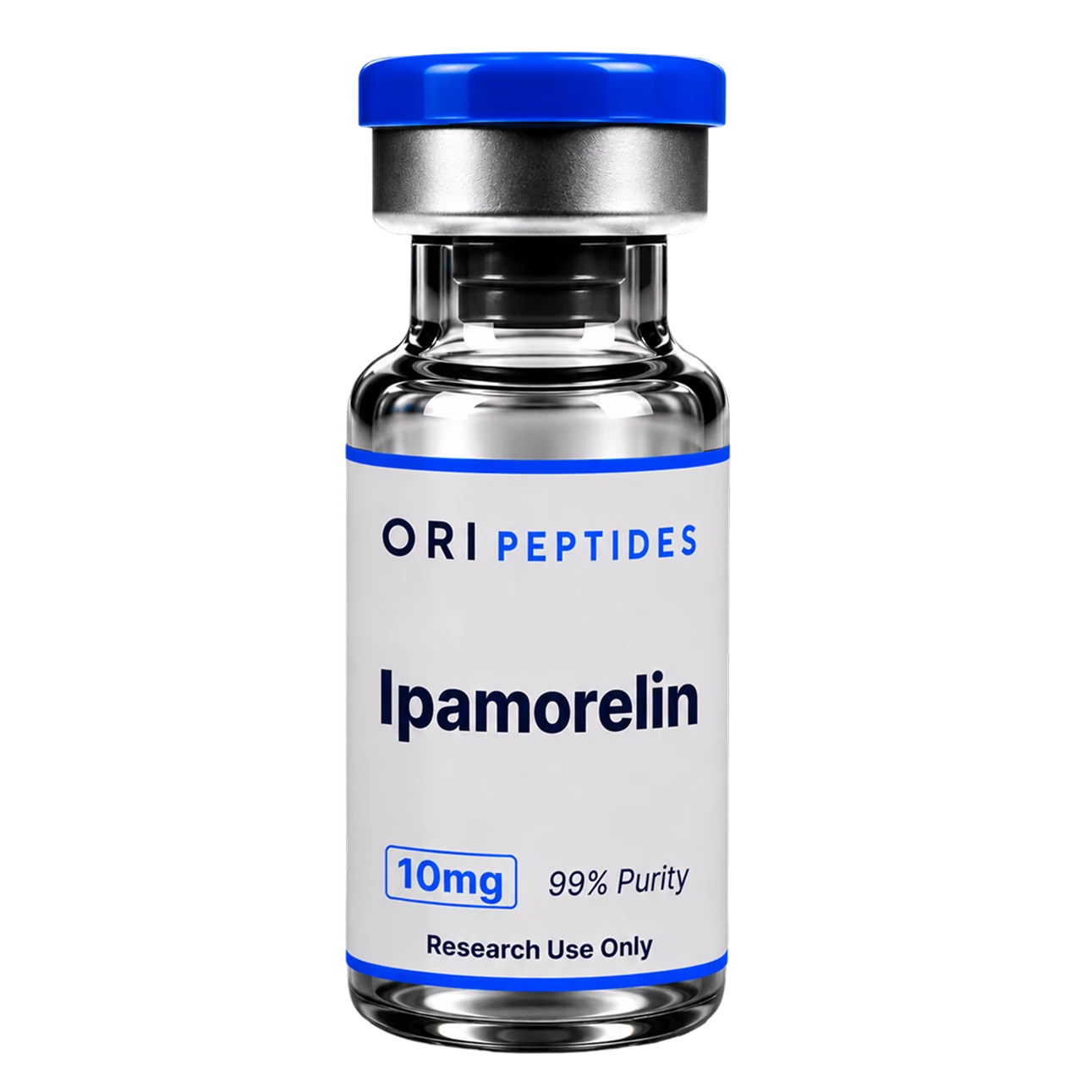
Ipamorelin
Research-grade Ipamorelin, third-party tested above 99% purity and produced in a cGMP facility, for growth hormone secretagogue research.
Hormone Therapy
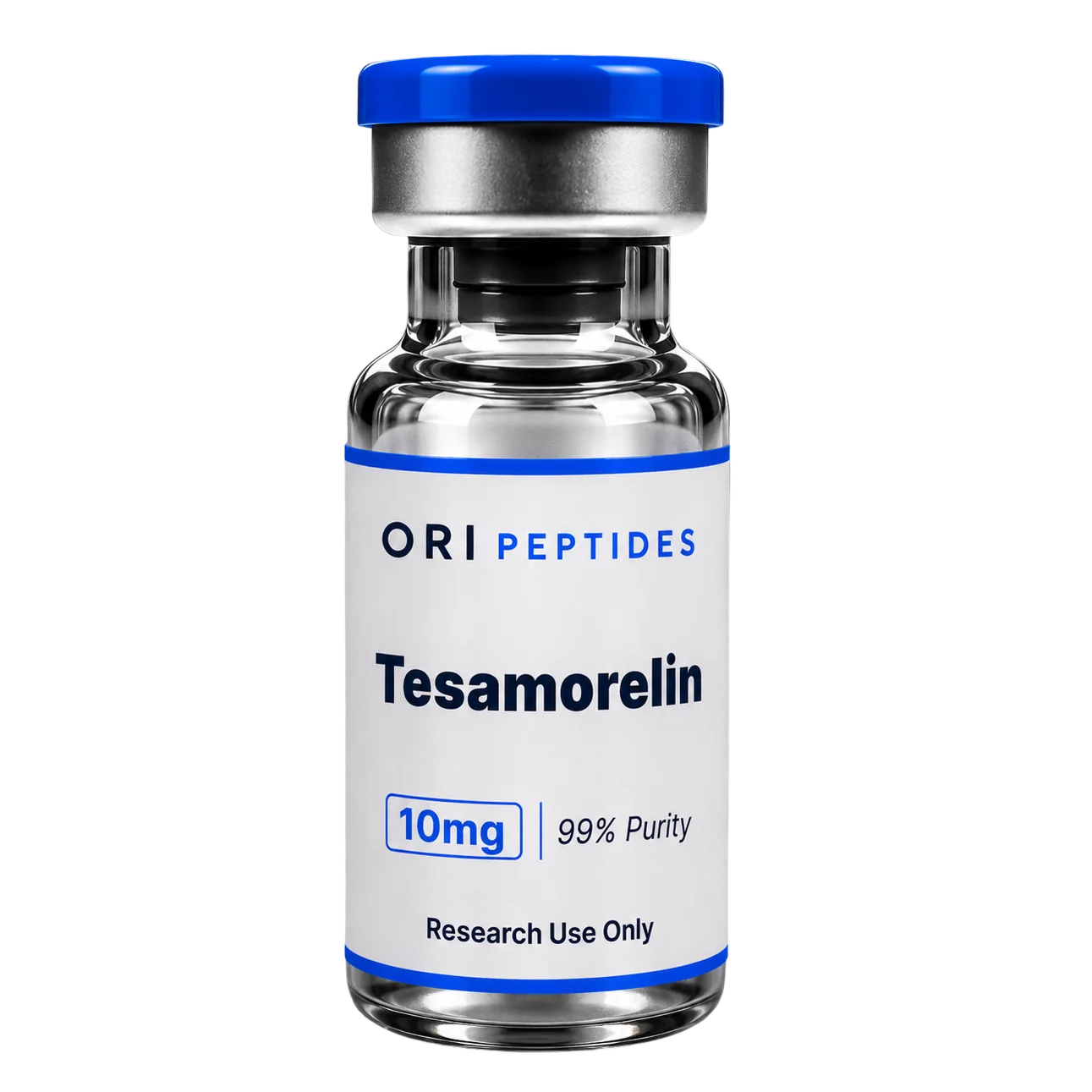
Tesamorelin
Research-grade Tesamorelin, a synthetic GHRH analog third-party tested above 99% purity and produced in a cGMP facility, for growth hormone release research.
See also: CJC-1295 and Ipamorelin in Research Studies Explained
What This Shift Actually Changed
Three concrete differences separate the peptide research era from the steroid research era.
- A narrower mechanism. Steroid research had to account for androgen receptor activity across many tissue types at once. Peptide research targeting growth hormone or IGF-1 pathways deals with a narrower, more specific mechanism, which makes it considerably easier to work out which effect is actually caused by which pathway. Growth hormone and IGF-1 still act on many tissues, so “narrower” describes the research target, not a guarantee of muscle-only effects.
- Clearer cause and effect. A narrower target makes it easier to design studies that isolate one mechanism, which helps researchers interpret and repeat their results.
- A wider field to explore. Steroid research was largely confined to variations on a single hormonal mechanism. Peptide research spans multiple distinct pathways, including growth hormone secretagogues, IGF-1 signaling, and tissue-repair peptides, giving researchers a much wider field to explore than the steroid era ever offered.
See also: Tesamorelin Dosage, Benefits and Safety Guide
A Genuine Scientific Progression, Not Just a Rebrand
It would be easy to read this shift as simply a rebranding of the same goal with a friendlier-sounding compound category. That undersells what actually changed. Steroid research and peptide research are asking fundamentally different scientific questions. One is about copying a hormone’s broad effects. The other is about adjusting one specific step in a signaling chain. The peptide research era represents a genuine change in scientific approach to the underlying biology, not just a change in vocabulary.
Where the Research Goes From Here
As covered in our piece on why the fitness industry is watching muscle-building peptide research, this field is still relatively early in its development compared to the decades-deep body of steroid research that came before it. The narrower, pathway-specific approach that defines peptide research is likely to keep pushing the field toward even more targeted compounds, continuing the same precision-over-force trajectory that separated this research era from the one before it.
FAQ
Why did muscle research move away from steroids toward peptides?
Steroids bind broadly to androgen receptors across many tissue types, which makes it hard to isolate one specific mechanism. Peptide research targets much narrower signaling pathways, which produces a more precise and repeatable research picture.
Does this shift mean peptide research replaces everything steroid research found?
No. It represents a different research approach built on a narrower set of mechanisms, not a rejection of the earlier findings. The two bodies of research are asking different scientific questions.
Is peptide research as established as decades of steroid research?
Not yet. Peptide research in this space is still comparatively early, and much of it remains preclinical, though interest in narrower, pathway-specific approaches keeps growing.
Are the compounds discussed in this research approved for human use?
Most are not. Tesamorelin is an exception: it is approved as a prescription drug (Egrifta) for a specific condition in people with HIV, but research-grade material sold for laboratory use is not that approved product. Research-grade compounds are not intended for human or animal consumption, diagnostic use, or therapeutic use of any kind.
Research Use Disclaimer
This content is provided for Research Use Only (RUO). The compounds discussed are not drugs, dietary supplements, foods, or cosmetics, and are not intended for human or animal consumption, diagnostic use, or therapeutic use of any kind. They have not been evaluated by the FDA for safety or efficacy in humans. Any research use must be conducted by qualified professionals in a controlled laboratory environment, in accordance with all applicable institutional, local, and federal regulations.
Sources
- Wikipedia. Anabolic steroid, its broad mechanism and history of effects beyond muscle tissue.
- Wikipedia. Androgen receptor, its presence across many tissue types in the body.
- Wikipedia. Growth hormone secretagogue, how these compounds trigger growth hormone release.