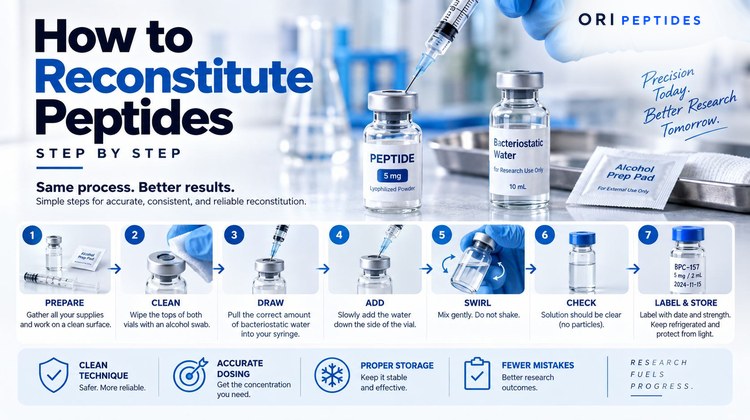
Reconstituting a peptide just means adding water to the dry powder in the vial so it turns into a liquid that can be measured and used in a research setting. It sounds technical, but the process is simple once the steps are clear, and getting it wrong is one of the easiest ways to waste a vial in a lab. This guide covers what is needed, how to work out the water amount, the mixing steps, and how to store the mixed liquid afterward. The examples here use common research peptides like BPC-157, TB-500, ipamorelin, MOTS-c, and GHK-Cu, though the same basic process applies across freeze-dried peptide material generally. This content is provided for Research Use Only (RUO).
What You Need Before You Start
- The peptide vial itself. Every vial should come with a certificate of analysis, the lab paperwork confirming what is actually inside and how pure it is. Check the vial against that paperwork before opening anything.
- Bacteriostatic water. Sterile water with a tiny amount of preservative added, so the vial stays germ-free even after being opened and used several times, instead of needing a fresh vial of water every time.
- A U-100 syringe. A small syringe marked in “units” instead of milliliters, sized as 0.3 mL, 0.5 mL, or 1.0 mL. No matter the size, 100 units always equals 1 mL, which keeps the math predictable.
- Alcohol swabs, gloves, and a sharps container. Simple supplies for keeping things clean and disposing of needles safely, standard for any research bench.
- A marker, labels, and a clean flat surface. Easy to forget, but hard to do without once the vial is already mixed and needs a label.
- Refrigerator or freezer access. The dry powder and the mixed liquid both need cold storage, just on different schedules, covered further down.
Working Out the Water Ratio
Concentration just describes how strong the mixed liquid is: how much peptide is packed into every milliliter. The math is simple, the peptide amount in the vial, in milligrams, divided by the water added, in milliliters. The table below shows how this plays out for a common 5 mg vial. Most standard peptide vials hold about 3 mL of liquid in total, which caps how far a single vial can be diluted.
| Water Added | Final Strength | What That Means |
|---|---|---|
| 1 mL | 5 mg per mL | A strong, concentrated mix |
| 2 mL | 2.5 mg per mL | A medium-strength mix |
| 2.5 mL | 2 mg per mL | A slightly weaker mix |
| 3 mL | about 1.67 mg per mL | The most diluted of these options |
- More water means a weaker mix, not less peptide. Adding more water spreads the same amount of peptide across more liquid. The total peptide in the vial never changes, only how concentrated it is.
- A calculator does the math automatically. The Concentration Calculator takes the vial strength and the planned water amount, then returns the concentration, the draw volume, and the exact mark to look for on a U-100 syringe, across all three barrel sizes at once. That removes the risk of a decimal mistake made by hand.
- Bacteriostatic water has its own shelf life once opened. A commonly cited window is about 28 days after the first puncture, after which the preservative can no longer be trusted to keep the water germ-free, even if the peptide still looks fine.
See also: Peptide Reconstitution Ratios & How to Calculate Them
Peptides Covered in This Guide
The steps below work the same way across most common research peptides, though the exact concentration a researcher chooses will vary by project. Here are the peptides used as examples in this guide.
| Peptide | Common Research Category | Vial Size Used in These Examples |
|---|---|---|
| BPC-157 | Injury and Recovery | 5 mg |
| TB-500 | Injury and Recovery | 5 mg |
| Ipamorelin | Hormone Therapy | 5 mg |
| MOTS-c | Anti-Aging | 5 mg |
| GHK-Cu | Anti-Aging | 5 mg |
See also: BPC-157 Dosage and Reconstitution Guide
Injury and Recovery
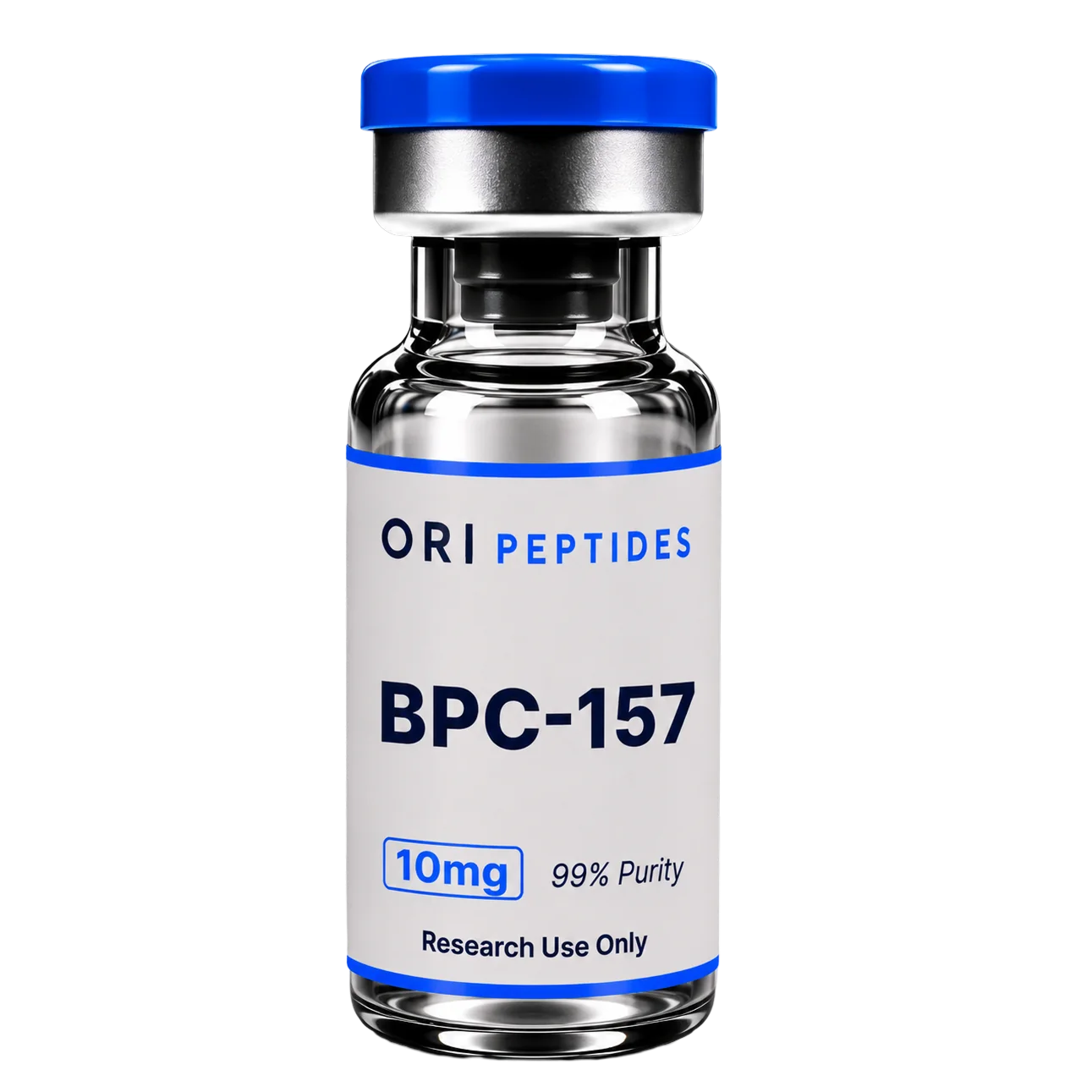
BPC-157
A widely studied research peptide, greater than 99% purity, used as one of the reconstitution examples in this guide.
Mixing Steps
- Lay out everything first. Vial, water, syringe, swabs, labels, and a clean surface, all within reach before opening anything.
- Wipe both rubber stoppers with alcohol. The water vial and the peptide vial both need a clean top before a needle goes through either one.
- Decide the water ratio first. Use the Concentration Calculator or the table further up to settle on the water amount and the resulting concentration ahead of time, rather than figuring it out mid-mix.
- Draw the water and clear any air bubbles. A small air pocket is normal. Tap the syringe gently and push the air out before adding the water.
- Add the water slowly, down the inside wall of the vial. Letting it run down the glass rather than hitting the powder directly cuts down on foaming and stress on the peptide.
- Swirl gently. Do not shake. Shaking adds stress and air that can damage the peptide, where a slow swirl dissolves the powder just as well.
- Check that it looks right. Most reconstituted peptides look clear once mixed, though a few have an expected light tint. If something looks off, check the product’s own documentation rather than guessing.
- Label the vial right away. Write the date and the final concentration on the vial before it goes near the refrigerator.
- Store it immediately. Once labeled, the vial goes straight into cold storage rather than sitting on the bench.
Storing It After Mixing
- Refrigerate unless told otherwise. Once a peptide is in liquid form, it generally needs steady refrigeration rather than room temperature.
- Keep it out of the light. A cabinet or the back of a fridge shelf works better than a spot that gets direct light all day.
- Check the specific product’s storage window. How long a mixed vial stays good varies by peptide, so treat this as a starting point, not a substitute for that product’s own instructions.
- Avoid repeated freeze-thaw cycles. Moving a vial in and out of the freezer repeatedly wears it out faster than keeping it at one steady, cold temperature.
- Split larger vials into smaller portions if that fits the plan. Fewer freeze-thaw cycles per portion beats one vial opened and closed again and again.
Where Reconstitution Goes Wrong
- Using the wrong liquid. Tap water, saline, or plain sterile water without a preservative are common substitutes, but each one adds a contamination risk or shortens how long the mix stays usable.
- A math slip in the water ratio. Skipping the calculator and guessing the water amount is a common reason two people get different concentrations from what should be identical vials.
- Shaking instead of swirling. It feels faster, but it is also the most common way to damage the powder.
- Squirting the water straight onto the powder. Faster, but it causes foaming and adds unnecessary stress right at the start.
- Skipping the certificate of analysis. Mixing a vial without checking its paperwork first means starting from an unverified guess about what is inside.
- Reusing needles or skipping alcohol swabs. Small shortcuts that add contamination risk without saving much real time.
- Forgetting to label the vial. An unlabeled vial in the fridge turns into a guessing game within a few days.
- Assuming every peptide behaves the same way. Storage windows, appearance, and handling details vary by compound, so no single rule covers all of them perfectly.
FAQ
Can tap water be used instead of bacteriostatic water?
No. Tap water lacks the preservative that keeps a multi-use vial germ-free, and it is not sterile in the way research reconstitution calls for.
How long does bacteriostatic water last once opened?
About 28 days after the first puncture is a commonly cited window, though the product’s own label is the more reliable reference.
What does it mean if a vial looks cloudy after mixing?
Usually that something did not dissolve properly, or the material has broken down. A cloudy vial is not one to keep using.
Is it fine to reuse the same needle for multiple draws?
No. A fresh needle each time keeps contamination risk down and stays sharp enough for a clean draw.
Does every peptide reconstitute with the same ratio and storage rules?
No. The general process applies broadly, but the exact concentration and storage window vary by compound, so a peptide-specific guide is worth checking too.
Does the syringe barrel size change the measurement?
No. A U-100 syringe always reads 100 units per milliliter, whether the barrel holds 0.3 mL, 0.5 mL, or 1.0 mL, so the same concentration lines up to the same mark either way.
Research Use Disclaimer
This content is provided for Research Use Only (RUO). The compounds discussed are not drugs, dietary supplements, foods, or cosmetics, and are not intended for human or animal consumption, diagnostic use, or therapeutic use of any kind. They have not been evaluated by the FDA for safety or efficacy in humans. Any research use must be conducted by qualified professionals in a controlled laboratory environment, in accordance with all applicable institutional, local, and federal regulations.
Sources
- Centers for Disease Control and Prevention. Frequently Asked Questions Regarding Safe Practices for Medical Injections, guidance on multi-dose vials and the 28-day rule after first puncture.
- Wikipedia. Benzyl alcohol, use as a bacteriostatic preservative in injectable medications.
- Wikipedia. Insulin syringe, U-100 syringe markings and the units-to-milliliter conversion.